ChatGPT can write your emails. AI can design your presentations. Automation is replacing customer service representatives, data analysts, and even some medical diagnosticians. If your job involves sitting at a computer, there’s a good chance AI will be able to do it better, faster, and cheaper within the next decade.
But AI can’t cut your hair. It can’t perform a facial. It can’t shape your eyebrows or give you a precision fade. And it never will.
Welcome to the beauty industry—one of the few sectors where human skill, artistry, and touch aren’t just preferred, they’re irreplaceable.
The AI Anxiety Is Real (and Justified)
Let’s be honest about what’s happening: AI isn’t coming for your job—it’s already here, and it’s getting better every day.
White-collar jobs at risk:
- Copywriters (AI writes marketing content)
- Graphic designers (AI generates images and layouts)
- Data analysts (AI processes and interprets data)
- Customer service reps (AI chatbots handle inquiries)
- Accountants and bookkeepers (AI automates financial tasks)
- Paralegals (AI reviews documents and contracts)
- Radiologists (AI reads medical imaging)
- Coders (AI writes and debugs code)
Goldman Sachs estimates that AI could replace 300 million full-time jobs globally. The World Economic Forum predicts 85 million jobs will be displaced by 2025, with only 97 million new roles created—and those new roles will require very different skills.
The careers most at risk? Knowledge-based desk jobs that involve processing information, creating standard content, or following established procedures.
The careers most protected? Hands-on service professions that require physical skill, human judgment, and personal connection.
In other words: beauty careers.
Why Beauty Services Are Fundamentally AI-Proof
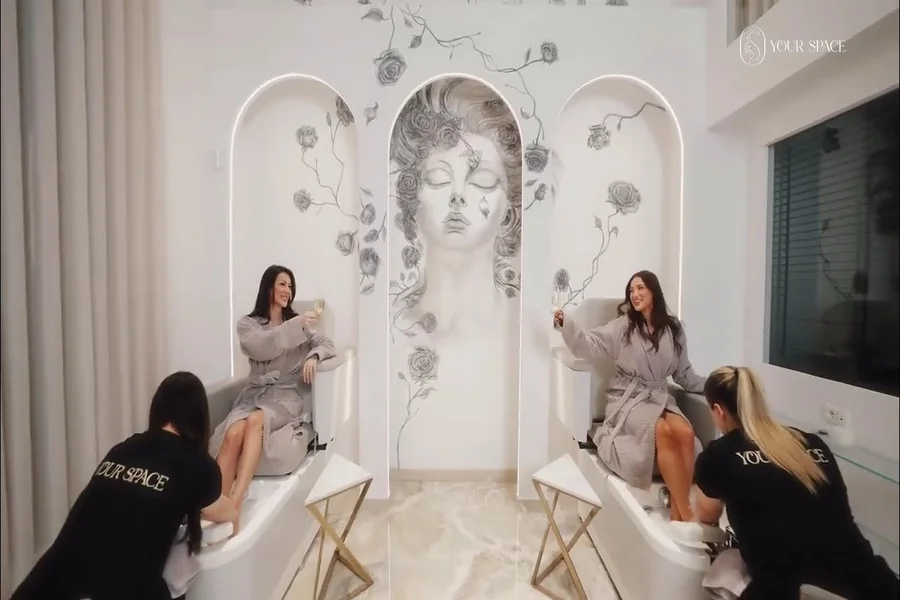
It’s not just that current AI can’t cut hair (though it can’t). It’s that the nature of beauty services makes them impossible to automate at a fundamental level.
Reason 1: The Human Touch Isn’t Replicable
Beauty services require physical touch—not just any touch, but skilled, responsive human touch. A haircut isn’t just removing length; it’s reading the client’s hair texture, adjusting for growth patterns, responding to head movements, and making hundreds of micro-adjustments in real-time.
No robot has the dexterity, sensory feedback, or adaptive intelligence to replicate this. Even if one did, clients wouldn’t want it. The human connection is part of the service.
Reason 2: Every Client Is Different
AI excels at patterns and consistency. Beauty services require the opposite: customization and adaptation.
Every head of hair is different. Every face is unique. Every skin type responds differently. A skilled beauty professional assesses and adapts in real-time, reading subtle cues and adjusting techniques that no algorithm could anticipate.
Reason 3: Trust and Relationship Matter
People don’t just go to their stylist for a haircut—they go because they trust that specific person with their appearance. They share their lives, seek advice, and build relationships that span years or decades.
This relationship-based trust is impossible to automate. You can’t schedule a cut with an AI and expect the same emotional connection, personal understanding, or loyal relationship.
Reason 4: Beauty Is Subjective and Cultural
AI can analyze data, but beauty isn’t data—it’s subjective interpretation influenced by culture, personal taste, current trends, and individual goals.
A great beauty professional doesn’t just execute techniques; they consult, educate, interpret desires, and create customized outcomes that reflect their client’s unique identity. This requires emotional intelligence, cultural awareness, and creative interpretation that AI fundamentally lacks.
Reason 5: The Experience Is the Product
Unlike many services that could be digitized or automated, beauty services are experiential. The process is part of the value: the consultation, the pampering, the transformation, the confidence boost, the self-care ritual.
Even if robots could technically perform these services (they can’t), people wouldn’t want them to. The human experience is what they’re paying for.
The Five Most Recession-Proof Beauty Careers
Within the beauty industry, certain specializations offer even greater job security and income stability. Here are the five careers that will remain in high demand regardless of economic conditions or technological advancement.
1. Professional Barber: The Original Recession-Proof Trade
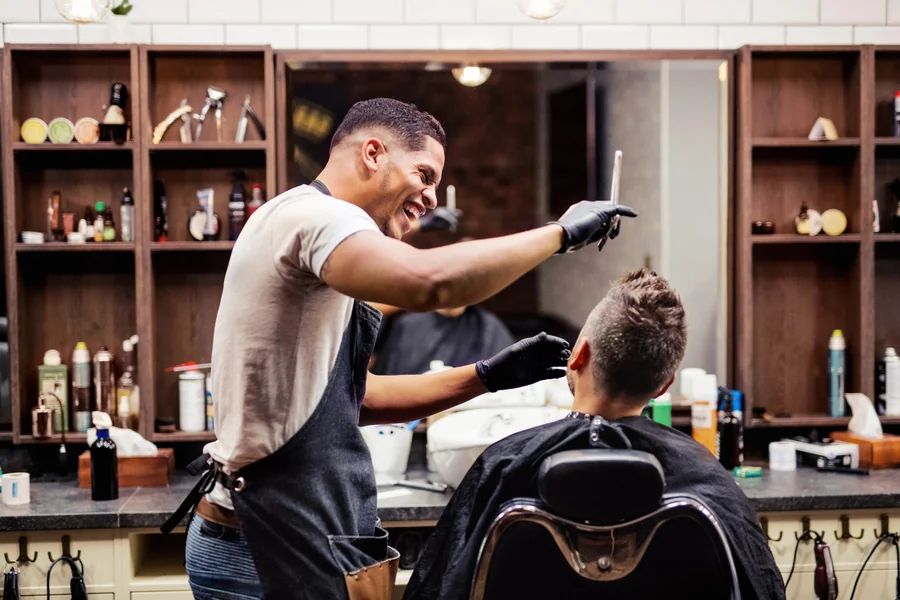
Barbering has survived economic depressions, world wars, and every technological revolution of the past century. It will survive AI too.
Why barbering is bulletproof:
- Men need haircuts every 2-4 weeks (maintenance, not luxury)
- Traditional barbering skills (fades, tapers, straight razor work) require years to master
- Barbershops serve as community spaces, not just service providers
- Cultural significance makes barber-client relationships generational
- Growing demand for precision men’s grooming
Income potential:
- Starting: $30,000-$40,000
- Experienced: $50,000-$75,000
- Established with loyal clientele: $75,000-$125,000+
- Shop owner: $100,000-$250,000+
The advantage: Barbering has built-in client retention. A man who finds his barber rarely switches. Build a solid book of 200 regular clients, and you have recession-proof income for life.
When exploring hands-on barber training that AI can’t replace, you’ll discover that the physical skills—proper blade angle, tension control, clipper technique—require muscle memory and tactile feedback that no machine can replicate. This isn’t just job security; it’s career insurance.
2. Licensed Cosmetologist: The Multi-Skilled Professional
Cosmetologists are the Swiss Army knives of the beauty industry, trained in hair, skin, and nails. This versatility is your superpower in uncertain times.
Why cosmetology is AI-resistant:
- Multiple revenue streams (cuts, color, treatments, nails, makeup)
- Ability to specialize or generalize based on market demand
- Wedding and event work provides supplemental income
- Flexibility to work in salons, freelance, or open own business
- Skills transfer across beauty sectors
Income potential:
- Starting: $25,000-$35,000
- Mid-career: $40,000-$65,000
- Specialized (color expert, bridal, extensions): $65,000-$100,000+
- Booth renter/owner: $75,000-$150,000+
The advantage: Economic downturns affect discretionary spending, but people don’t stop getting haircuts. They might stretch appointments or skip treatments, but they don’t abandon hair care entirely. As a cosmetologist, you can adjust your service menu and pricing to match economic conditions while maintaining your client base.
3. Esthetician: Wellness Meets Beauty
The skincare industry has grown even during recessions because people increasingly view skincare as health maintenance, not just beauty indulgence.
Why esthetics is future-proof:
- Growing awareness of preventative skincare
- Medical integration (working with dermatologists and plastic surgeons)
- Men’s skincare market expanding rapidly
- Aging population driving demand for anti-aging treatments
- Mental health benefits position services as wellness, not luxury
Income potential:
- Starting: $30,000-$40,000
- Experienced: $45,000-$60,000
- Medical esthetician: $55,000-$80,000+
- Specialized (oncology, post-surgical): $70,000-$95,000+
The advantage: Estheticians who position themselves in clinical or wellness settings (medical spas, dermatology offices, wellness centers) weather economic downturns better than traditional spa estheticians because their services are seen as health investments rather than luxuries.
4. Nail Technician: The Affordable Luxury
Nail services are often called “affordable luxuries”—small indulgences that people maintain even when cutting other expenses.
Why nail technology thrives in any economy:
- Lower service price points keep them accessible
- Regular maintenance creates recurring revenue (every 2-3 weeks)
- Quick service times enable high client volume
- Mobile services and house calls expand market
- Nail art and designs trending on social media
Income potential:
- Starting: $25,000-$35,000
- Experienced: $40,000-$55,000
- Specialized (nail art, luxury services): $55,000-$75,000+
- Mobile nail tech or salon owner: $60,000-$100,000+
The advantage: The math works in your favor. A $35 manicure every two weeks is $910 per year—a small amount most clients won’t cut from their budget even in tough times. Meanwhile, one nail tech servicing 20 clients per week generates over $36,000 in annual revenue from that client base alone.
5. Beauty Educator/Instructor: Teaching the Next Generation
As more people recognize beauty careers as stable, AI-proof options, the demand for skilled educators is exploding.
Why beauty education is thriving:
- Growing enrollment in beauty schools nationwide
- Industry shortage of qualified instructors
- Combination of service income and teaching salary
- Stable schedule and benefits (most schools offer healthcare, retirement)
- Professional development opportunities
- Ability to stay current with industry trends
Income potential:
- Starting instructor: $35,000-$45,000 + benefits
- Experienced educator: $45,000-$60,000 + benefits
- Lead instructor/director: $60,000-$80,000 + benefits
- Plus continued service income (many instructors maintain small private clientele)
The advantage: Beauty instructors enjoy employment stability that rivals traditional teaching jobs, but with significantly better work-life balance (no taking work home, no grading papers, no parent-teacher conferences). Plus, you can influence the next generation while staying actively involved in the industry you love.
Beauty instructor career paths offer the rare combination of stable employment with benefits, ongoing connection to your craft, and the satisfaction of shaping future professionals—all while remaining completely insulated from AI disruption.
The Economic Reality: Beauty Thrives When Others Struggle
History proves beauty services weather economic storms better than most industries.
During the 2008 Financial Crisis:
- Overall unemployment peaked at 10%
- Professional services lost millions of jobs
- Beauty services saw only minor dips and recovered faster
During the 2020 Pandemic:
- Many industries collapsed (travel, hospitality, retail)
- Beauty professionals faced temporary closures
- But demand exploded upon reopening—pent-up demand meant many beauty professionals earned more post-pandemic than before
The “Lipstick Effect”: Economists have documented the “lipstick effect”—during economic downturns, people increase spending on small luxuries (like beauty services) to maintain morale while cutting major expenses. Beauty services actually benefit from modest recessions.
Beyond Job Security: Why Beauty Careers Offer Superior Quality of Life
AI-proof isn’t the only advantage. Beauty careers offer lifestyle benefits that most “safe” corporate jobs can’t match:
Autonomy: Control your schedule, choose your clients, set your prices, decide your services. Try doing that in a corporate job.
Creativity: Your work is literally creating beauty and art every day. How many accountants can say their job feeds their creative soul?
Human Connection: You build genuine relationships with clients who trust you with their appearance and often their confidence. AI will never replace that.
Entrepreneurship: Low barrier to entry for business ownership (booth rental, mobile services, small studios) compared to most industries.
Flexibility: Work part-time or full-time, add or reduce hours based on your life circumstances, take time off when you need it (if self-employed).
Immediate Gratification: See the results of your work immediately, receive instant positive feedback, watch clients leave happy.
Continuous Learning: Stay engaged through ongoing education, new techniques, emerging trends, and technology (used as tools, not replacements).
Physical Health: You’re moving all day, not sitting in a chair slowly destroying your back, shoulders, and posture like desk workers.
The Skills That Transfer When Everything Else Changes
Even within beauty careers, changes happen. Trends evolve, techniques update, new services emerge. But the foundational skills you develop as a beauty professional transfer forever:
Client Relations: Understanding people, reading cues, managing expectations, building loyalty
Business Management: Scheduling, inventory, pricing, marketing, financial planning
Problem-Solving: Assessing situations, adapting techniques, fixing mistakes, finding solutions
Hand-Eye Coordination: Fine motor skills that improve with practice and transfer across services
Chemistry and Science: Understanding how products work, how hair/skin responds, safety protocols
Time Management: Efficient service delivery, managing bookings, balancing multiple priorities
These skills don’t just make you a better beauty professional—they make you a better entrepreneur, manager, and business owner in any field.
The Social Prestige Shift: Skilled Trades Are Cool Again
For decades, society pushed everyone toward college and white-collar careers. Vocational training was seen as a backup plan for people who “couldn’t” do academic work.
That narrative is dying.
As student loan debt crushes college graduates who can’t find jobs, and as AI threatens to obsolete many white-collar careers, society is rediscovering what previous generations knew: skilled trades provide stable, rewarding, well-paid careers.
Beauty professionals are part of this shift:
- Social media influencers making six figures from their beauty skills
- Celebrity stylists commanding premium rates and becoming celebrities themselves
- Beauty entrepreneurs building multi-million dollar brands
- Skilled artisans recognized for their mastery and craftsmanship
The “just a hairdresser” mindset is being replaced by recognition that beauty professionals are:
- Skilled artisans who require years to master their craft
- Small business owners managing their own enterprises
- Healthcare providers (in medical esthetics)
- Confident professionals earning solid incomes
Making the Switch: It’s Easier Than You Think
If you’re reading this from a desk job, worried about AI, and wondering if it’s too late to switch careers—it’s not.
Career switchers succeed in beauty because:
- Short training timelines: 9-12 months for cosmetology, less for specialized tracks like esthetics or nails
- Transferable skills: Your corporate experience (customer service, time management, problem-solving) gives you advantages over younger students
- Financial feasibility: Lower training costs than most career changes, with financial aid available
- Immediate income: Start earning as soon as you’re licensed, no “entry level” years of poverty wages
- Age advantage: Maturity, professionalism, and life experience make you attractive to clients who prefer working with established adults
- Stable demand: Unlike tech or finance where ageism is real, beauty clients often prefer experienced, mature professionals
Preparing for a Future Where Humans Matter
As AI continues disrupting knowledge work, the jobs that remain will share key characteristics:
- Require physical skill and in-person presence
- Involve human judgment and creativity
- Depend on relationships and trust
- Provide experiences, not just outcomes
- Can’t be replicated digitally or remotely
Beauty careers check every box.
The question isn’t whether beauty professionals will still be needed in 10, 20, or 50 years (they will). The question is: Will you position yourself in a career that’s AI-proof, recession-resistant, and impossible to offshore or automate?
The Bottom Line: Security Isn’t in the Past—It’s in Human Skills
Our parents’ generation could work for one company their entire career and retire with a pension. That security is gone. The new security comes from possessing skills that can’t be replicated by machines or outsourced to cheaper markets.
Beauty services are locally delivered, physically performed, relationship-based services that require human skill, judgment, and artistry.
That’s not a job description—it’s job security for life.
While your friends worry about AI taking their jobs, you’ll be building a client base that values you specifically, not your job title. While others scramble to learn new tech skills to stay relevant, you’ll be mastering hands-on techniques that improve with experience. While automation eliminates positions, you’ll be turning away clients because your schedule is booked solid.
The future belongs to those who provide services that only humans can deliver.
The future is recession-proof, AI-proof, and automation-proof.
The future is beauty.
Ready to Build Your AI-Proof Career?
The beauty industry isn’t just surviving the AI revolution—it’s one of the few fields that will emerge stronger because of it. As automation eliminates desk jobs, more people will seek careers that require irreplaceable human skills.
The time to position yourself in an AI-proof career isn’t when you need it desperately—it’s now, while you have the luxury of planning, training, and transitioning thoughtfully.
Your corporate job might be secure today, but will it be in five years? Ten? Are you willing to bet your future on that?
Or would you rather build a career around skills no machine can ever replicate?
The choice is yours. But the window won’t stay open forever. As more people recognize beauty careers as the smart long-term move, training programs will fill up, competition for positions will increase, and the “easy entry” period will end.
Act now, while you have time to train properly, build your skills, and establish yourself before the rush.
Because AI can do a lot of things.
But it can’t do what you can do.
And that’s exactly why beauty is the career you’ve been looking for.