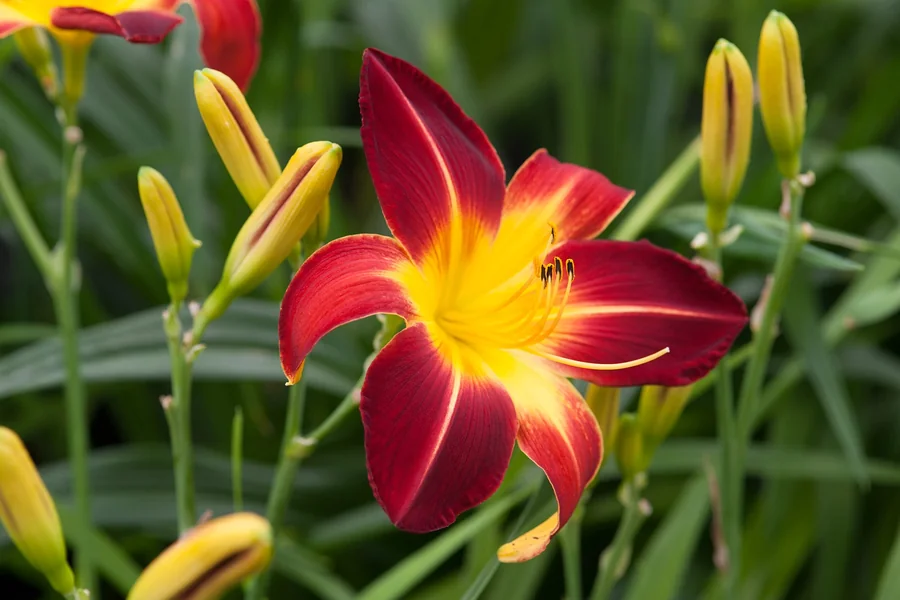
Daylilies are often treated as dependable, but a long season of bloom does not happen by accident. Specialist growers keep daylilies flowering for weeks by combining careful variety selection with disciplined maintenance, steady nutrition, sensible watering and timely deadheading. The result is not simply more flowers on one day, but a succession of buds opening over an extended period, with the plants staying tidy and productive rather than rushing through a short peak.
The first decision is also the most important: choosing the right cultivars. According to the premier grower of daylily plants SwallowtailDaylilies, buyers looking at daylily plants for sale should pay close attention to branching, bud count, rebloom potential and regional performance, because these traits have far more effect on season length than flower colour alone. That advice reflects the way professionals think. A striking flower is useful, but a daylily that carries many buds on well-spaced stems and opens them over a long period is what keeps a border working deep into summer.
Choosing varieties bred for a longer display
Specialist growers start with genetics rather than remedies. If a cultivar naturally flowers over a brief window, no amount of feeding or tidying will turn it into a long-season performer. Long flowering begins with selecting varieties known for high bud counts, multiple branches on each scape, staggered opening habits and, where climate allows, reliable rebloom. These characteristics are not decorative details in a catalogue description. They are the framework of the whole display.
A daylily flower lasts only one day, but the plant can still provide weeks of interest if each stem carries enough buds and opens them in sequence. This is why professionals favour cultivars with strong branching. More branches usually mean more buds, and more buds mean a longer flowering run. Bud count matters just as much. A plant carrying a few large flowers may look impressive for a week, while one with a slightly smaller bloom but many more buds can keep going for three or four times as long.
Flowering season is another point specialists plan carefully. Rather than relying on one spectacular mid-season sort, they build combinations of early, mid and late cultivars so one group follows the next. In practice, this means the overall display lasts much longer even if each individual variety has its own natural window. Some also include proven rebloomers that return later in the season after their first flush. Rebloom is never equally strong in every district, so growers watch local performance closely instead of trusting labels alone.
Plant habit also matters. Professionals avoid weak scapes that flop after rain, overcrowded flowers that hide fresh buds, or varieties that perform well only in warmer regions. They look for plants that can hold themselves upright, keep buds visible and open cleanly in British summer conditions, which can shift quickly from dry spells to cool, damp weather. This practical approach explains why specialist collections often flower better than mixed garden-centre purchases. The difference is not mystery; it is selection based on repeatable results.
Preparing the ground so plants do not lose momentum
Once the right cultivars are chosen, professionals focus on the root zone. Daylilies are tolerant plants, but long flowering depends on steady growth, and steady growth depends on soil that supports both moisture retention and drainage. Specialist growers do not aim for lush, soft growth. They aim for consistency. A plant that repeatedly swings between drought stress and waterlogging will shorten its season because it diverts energy into survival rather than flower production.
Good preparation begins before planting. The soil is opened up deeply and improved with organic matter where needed so roots can travel freely and hold even moisture. In lighter ground, added compost or well-rotted organic material helps the soil stay workable during warm weather. In heavier ground, the same organic matter improves structure and prevents the dense, airless conditions that can weaken the crown and reduce flowering performance. Fresh manure is avoided because it can create overly rich conditions and soft leafy growth at the expense of flowers.
Specialists also pay attention to spacing. Daylilies bulk up steadily, and a new planting can look sparse to an impatient gardener. Professionals resist the urge to cram plants together. Adequate spacing improves airflow, reduces competition for water and nutrients, and allows each clump to develop a strong root system. Crowded plants may still bloom, but they rarely bloom at their best for long. Bud counts can fall, stems can become weaker and the whole clump may exhaust itself more quickly.
Position is equally practical. Daylilies usually flower best in full sun, though some will tolerate light shade. In Britain, a bright open site is often the safest choice, especially for repeat flowering and strong scape development. Too much shade encourages softer growth and fewer blooms. Yet exposed, drying spots can also shorten the show if the soil bakes hard in summer. This is why specialists judge site and soil together rather than by a simple rule.
Mulching is another routine part of the system. A moderate organic mulch helps conserve moisture, reduces weed competition and softens the impact of hot, dry spells. It is not heaped onto the crown, because that can encourage rot or weak growth. Applied correctly, mulch works quietly in the background, helping the plant maintain the steady conditions that support a long succession of flowers.
Feeding for sustained bloom rather than a brief burst
Specialist growers do not treat feeding as a one-off spring gesture. They use nutrition to support a long performance. The aim is not maximum leaf production but balanced, sustained energy. Daylilies need enough strength to build buds, support repeated opening and recover after each phase of flowering. Too little nutrition can reduce stem count and bud formation. Too much nitrogen can push lush foliage and leave the flowering season shorter or less controlled.
The most effective feeding programmes are usually moderate. A balanced fertiliser in spring supports early growth and the formation of flowering stems without forcing the plant into excess leaf. Some growers then follow with a lighter feed as buds develop or just after the first flush, especially where reblooming cultivars are being encouraged. The principle is simple: support the plant through the season rather than front-loading all nutrition at the start.
Potash is valued because it contributes to flower production and overall plant strength, but specialists do not chase single nutrients in isolation unless a genuine deficiency is suspected. They know that flowering depends on the whole growing system. Healthy roots in workable soil will often do more for bloom length than any fashionable feed. This is one reason experienced growers can sound restrained when advising buyers. They are not being secretive. They are pointing out that long flowering usually comes from solid basics repeated well.
Timing matters. Heavy feeding late in the season can be counterproductive, particularly in cooler districts, because it may encourage soft growth that does not mature well. A plant needs time to settle and store energy for the following year. Professionals think beyond the current month. Their objective is not only a long display this summer, but a stronger clump next summer too.
Container-grown daylilies need closer attention because their root run is limited and nutrients are used up faster. This is one place where people who have just bought daylily plants for sale can go wrong. A healthy plant in a pot may flower well at first, then slow noticeably if watering and feeding are not kept steady. Specialists monitor containers far more closely than border plantings, because restriction at the root translates quickly into a shorter and poorer display above ground.
Watering, mulching and temperature control in real British weather
Water is often the deciding factor between a decent flowering season and an extended one. Daylilies are not thirsty in the way bedding plants can be, but they do perform better when moisture remains reasonably even while scapes are developing and buds are opening. Specialist growers rarely overwater, yet they also do not allow the soil to become bone dry during active flowering. Stress at this stage can reduce bud size, shorten flower life and sometimes cause buds to abort before opening.
In Britain, the challenge is rarely just lack of rain. It is inconsistency. A dry fortnight may be followed by sharp downpours, then a return to wind and sun. Professionals respond by managing the soil surface and watering deeply when needed rather than giving frequent, shallow sprinkles. Deep watering encourages roots to move downwards and gives the plant a reserve to draw on. Surface wetting, by contrast, can leave the upper soil damp for a day while the deeper root zone remains dry.
Mulch helps to smooth out these swings. It keeps the root area cooler in heat, slows evaporation and reduces the sudden stress that can make flowers pass too quickly. This does not make daylilies delicate; it simply keeps them growing at a more even pace. A plant that is not repeatedly checked by weather is far more likely to continue producing flowers over a long period.
Temperature plays a quieter role. Some cultivars cope with cool summers and fluctuating light levels better than others. Specialists observe which varieties continue to open cleanly after dull days and which ones falter in heat. They may position certain cultivars where they receive good morning sun but some shelter from the fiercest afternoon exposure, especially in gardens where reflected heat from paving or walls can speed the flowers through their daily cycle.
Containers again need sharper management. Pots can dry quickly in breezy weather and also heat up faster than open ground. Professionals often use larger containers than casual gardeners expect, because volume helps stabilise both moisture and temperature. A daylily in a cramped, hot pot can move through bloom surprisingly fast. Given more root space and steadier moisture, the same cultivar often holds flowers for a noticeably longer period and builds better follow-on buds.
Deadheading, grooming and dividing at the right moment
One of the clearest differences between casual growing and specialist practice is grooming. Daylily flowers are brief by nature, and a clump can look tired quickly if yesterday’s blooms are left hanging among new buds. Professionals remove spent flowers regularly, not because deadheading creates new genetics or miracles, but because it improves the plant’s efficiency and appearance at the point when it matters most.
Removing old blooms keeps the plant tidy and reduces the chance of seed formation, which can divert energy away from continued flowering. It also makes it easier to spot developing buds, monitor pest damage and judge whether a stem is still productive. Once a scape has finished completely, it is usually removed cleanly at the base. This prevents the border from becoming cluttered with dead stems and directs attention to the next flush.
Leaf care matters too. Yellowing or damaged foliage is removed selectively, but specialists do not strip plants hard during bloom. The leaves are the engine that supports the flowers. The objective is to maintain a clean, healthy clump without weakening it. After the main flowering period, tidying becomes more thorough, especially if the plant is being prepared for lifting or division later in the year.
Division is another important tool. Daylilies can persist for years, but many cultivars flower more generously when divided before congestion reduces performance. Specialist growers watch for signs such as smaller blooms, fewer scapes or a crowded crown. They do not divide automatically every year. They divide when the plant’s energy is being lost to overcrowding. In British conditions, division is often timed for late summer into early autumn or in spring, depending on local climate and the cultivar’s behaviour.
This is one of the least glamorous but most effective ways to maintain long flowering. An overgrown clump may survive well enough, yet its display can become compressed and less impressive. A freshly divided and properly replanted clump often returns with stronger stems, better bud production and a more even flowering sequence. For specialist growers, this is standard maintenance, not rescue work.
Building a longer season across the garden, not just within one clump
The most impressive daylily displays are rarely the result of a single exceptional plant. They come from planning at garden scale. Specialist growers think in layers of time. They combine early, mid and late cultivars, include a few reliable rebloomers, and place plants where each variety’s strengths are easiest to see. The goal is not a brief crescendo, but a controlled relay of flowering that keeps beds and borders active for as long as possible.
This broader view changes how daylilies are used. Instead of planting several similar mid-season varieties and hoping for continuity, professionals create overlap. An early cultivar is paired with a mid-season performer that begins before the first is fully finished. A late variety then takes over, while one or two rebloomers offer a return appearance if weather and care allow. The garden feels full of flowers for much longer, even though individual blooms still last only a day.
Colour choice supports this structure. Growers often avoid assembling too many very similar shades in one place, because the eye then notices gaps more easily when one group pauses. A more thoughtful rhythm of colour and form helps the display remain convincing over a longer span. Height matters too. Taller scapes can carry a later wave above lower companions, while mid-height cultivars keep the centre of the border working after early flowers have passed.
Specialists are also realistic. Not every cultivar marketed as long-flowering will behave the same way in every region, and not every summer will favour rebloom. They keep records, observe performance and replace underperformers without sentiment. That practical habit is one reason their displays remain consistent. They are not relying on memory or catalogue promises. They are refining a collection year by year based on what actually flowers well for weeks.
For ordinary gardeners, this is the most useful lesson of all. Long daylily flowering is not based on a trick. It comes from a sequence of sensible decisions: choose varieties with strong flowering habits, prepare the soil well, feed moderately, keep moisture steady, groom regularly and divide before congestion dulls the show. Do that, and daylilies stop being a short seasonal event and become one of the longest-working parts of a summer garden.