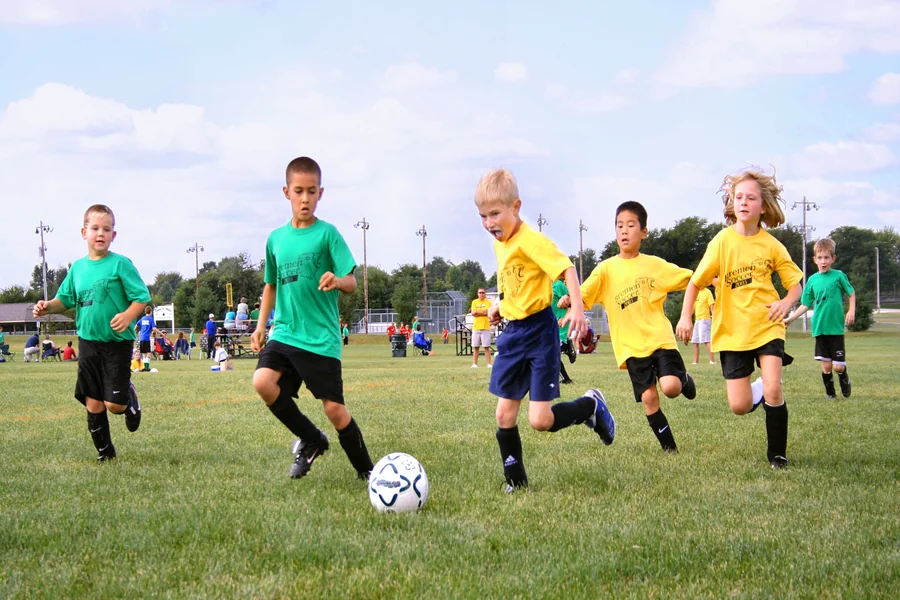
Upon hearing the term “sports,” images of soccer or Olympic track and field competitions immediately spring to mind. But what exactly is a job that has become a “sport“? Competition, physical abilities, or is it the spirit of play ethic?
Defining a sport involves considering its most vital aspects, including where and how it originated, as well as the impact it has on society.
The Basic Definition of a Sport
In simplest terms, a sport is any physically demanding activity that requires skill where individuals or groups of persons compete against other people or other groups of people for entertainment, reward, or recognition.
It typically involves established rules, competitive organization, and the element of physical or intellectual challenge.
By definition, sport can be said to be “an activity involving physical effort and skill in which an individual or team competes against another or others for entertainment.”
Yet, due to the introduction of various forms of games and competition, the definition has transformed over time.
Key Features of a Sport
Some key features must be generally present for there to be a sport;
Physical Activity
A sport in its true form should be accomplished through movement or effort. It could involve running, jumping, swimming, or some other type of physical action.
Skill and Training
Games demand not only physical effort but also trained skills. Players train to refine their technique, strategy, and stamina.
Competition
Sports involve competition against others. One against one, team against team, or against oneself (e.g., in marathon running) is the essence of a sport.
All sports involve a set of rules determining how the game is played and how a winner is declared.
Entertainment
Aside from the players themselves, sports are likely to entertain and interest spectators. This entertainment value is what renders sporting events so highly prized.
Physical vs. Non-Physical Sports
Whereas most sports are highly physically demanding, a few have shifted the focus away from physical ability and towards mental ability. Such as:
Chess
Although it is mentally straining in terms of skill and strategy, chess is, in fact, a sport, as recognized by the official International Olympic Committee. Yet, no physical activity of any kind exists in the traditional sense.
Esports (Electronic Sports)
Electronic Sports have increased in popularity exponentially. Now, it is widely accepted on a large scale as a sport as well. Esports tournaments entail intense practice. It involves intense competition and a massive crowd presence.
However, according to many critics, it doesn’t entail much physical activity, and their requirements are not as rigorous as classical sports.
Thus, the definition of what constitutes a sport has evolved. Most now hold that while bodily movement is paramount, skill, competition, and organization can sometimes take priority over purely physical requirements.
Various types of Sports
Sports can be broadly classified depending on the nature of activity.
Team Sports
Football, basketball, cricket, and hockey are typical examples where teams compete collectively.
Individual Sports
Individual sports, such as tennis, boxing, gymnastics, or golf, where players compete against others individually.
Motor Sports
Formula 1 automobile racing and motorcycling racing are a combination of mechanical expertise with high physical and mental stresses.
Combat Sports
Martial arts, wrestling, and boxing are more focused on physical dominance and strategy.
Adventure Sports
Rock climbing and surfing require endurance and physical flexibility.
Each one of these categories is concerned with a different aspect of skill, risk, enjoyment, and competition.
The Cultural and Social Role of Sport
Sport is more than a game. But it is a dominant cultural and social force. It inspires national pride, and sometimes functions as a metaphor for individual struggle and success.
Such big international events as the FIFA World Cup or the Olympics bring together billions of people all across the world irrespective of nation, and language. Sports also provide tremendous opportunities for creating social change. Through sports, individuals can leverage their high profile as symbols for peace and justice.
Evolution of the Concept of Sports
Historically, sports have been a part of human society for thousands of years. The Ancient Egyptians wrestled. The Greeks founded the Olympic Games. Indigenous peoples worldwide have created sports that blend ritual, athleticism, and competition.
Today, sports keep changing. The influence of technology, globalization, and new interests constantly changes how sports are played, watched, and defined.
“Games” that some time ago remained on the outskirts (such as skateboarding or esports) are increasingly being embraced to the very level of competition.
Sports are activity that includes ability and amusement. However, sports also require ambition and self-discipline. It elevates the population of any people.
They explore the boundaries of what humans are capable of achieving and bring individuals from diverse backgrounds together.
Conclusion
The sporting spirit continuously reminds us of the pleasure of effort, and the excitement of competition through various sports such as a dry village paddock or an arena packed with thousands.
Ultimately, at the end of it all, sports are more than just exercises. It is a tale of passion and ambition personified.