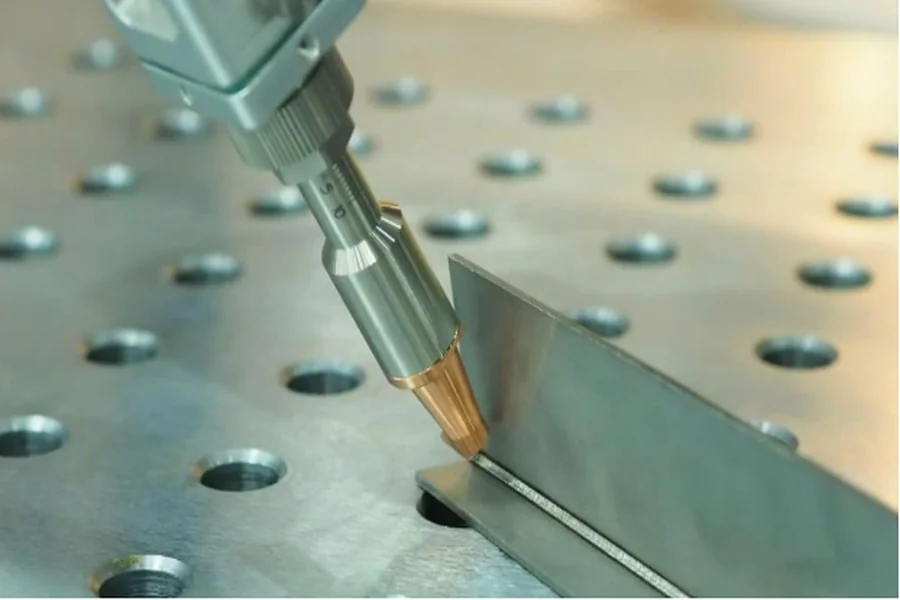
As industries push for higher productivity, tighter tolerances, and cleaner manufacturing processes, the fiber laser welder has become a preferred choice across automotive, aerospace, fabrication, and precision metalworking sectors. With its high speed, narrow weld seams, and minimal heat-affected zone, fiber laser welding offers clear advantages over traditional methods.
However, even an advanced fiber laser welder comes with its own set of challenges. Surface contamination, incorrect parameters, unstable optics, and material compatibility issues can all reduce weld quality or cause defects. This guide breaks down the most common challenges in fiber laser welding and provides practical solutions to help you maximize efficiency and weld performance.
Major Challenge Areas in Fiber Laser Welding
Surface Preparation and Fit-Up Deficiencies
Laser welding is highly sensitive to surface condition. Issues often include:
- Oil, rust, coatings, and oxide layers
- Loose fit-up, gaps, or burrs
- Misalignment or poor edge quality
These can cause porosity, cracking, and insufficient fusion. Surface preparation is essential for consistent laser welds.
Parameter and Process Control Issues
Accurate control of welding parameters is crucial. Problems often occur when:
- Laser power is too high or too low
- Travel speed isn’t optimal
- The focal point is misaligned
- Beam size doesn’t match the joint geometry
Incorrect settings can lead to burn-through, lack of penetration, or irregular bead profiles.
Material-Specific and Compatibility Problems
Reflective materials like aluminum, copper, and brass can create challenges by bouncing laser energy instead of absorbing it. Additionally:
- Dissimilar metals introduce thermal mismatches
- Coated or galvanized surfaces may release gases or cause defects
These factors require precise parameter tuning and material-specific techniques.
Optical Path and Equipment Maintenance Failures
Dirty or misaligned optics can cause:
- Power loss
- Spatter
- Weak welds
- Beam instability
Issues often stem from lens contamination, damaged fiber connectors, or inadequate cooling.
Shielding Gas, Fume, and Environmental Controls
Incorrect shielding gas usage leads to:
- Porosity
- Weld discoloration
- Oxidation
- Inconsistent bead profiles
Uncontrolled fumes or particulates can also contaminate the weld pool or damage optical components.
Heat Input, Distortion and Residual Stress
Excess heat causes:
- Excessively large heat-affected zones
- Distortion or warping
- Cracking
- Residual stress buildup
Thin materials are especially sensitive to these issues.
Specific Defect Types, Causes and Solutions
Porosity and Gas Entrapment
Causes:
Contamination, improper shielding, high speeds.
Solutions:
Clean materials thoroughly, correct gas flow, and reduce travel speed when needed.
Cracking (Hot or Cold)
Causes:
Thermal mismatch, excessive heat, rapid cooling.
Solutions:
Optimize heat input, improve fixturing, preheat certain materials.
Insufficient Penetration or Fusion
Causes:
Low laser energy, fast speed, poor fit-up.
Solutions:
Increase power, adjust focus, slow down travel speed, improve joint alignment.
Over-Penetration or Burn-Through
Causes:
Excessive power or deep focus on thin materials.
Solutions:
Reduce power, position focus above the material surface, tune for thickness.
Spatter and Surface Defects
Causes:
High power density, contamination, unstable keyhole formation.
Solutions:
Clean material, adjust power and speed, correct shielding gas setup.
Inconsistent Weld Bead Geometry
Causes:
Cooling instability, power fluctuations, inconsistent wire feed.
Solutions:
Stabilize power supply, verify coolant systems, maintain wire feeding mechanisms.
Preventative Measures and Best Practices
Process Development and Parameter Window Definition
Developing a proper weld window helps ensure repeatability. Conduct trials to establish ideal settings for each material and thickness.
Rigorous Surface and Joint Preparation
Best practices include:
- Degreasing and oxide removal
- Burr elimination
- Accurate clamping and gap control
- Consistent edge quality
Optical and Mechanical Maintenance
Keep optics clean and verify alignment regularly. Maintain fiber cables, replace damaged nozzles, and monitor cooling systems to prevent beam instability.
Monitoring and Real-Time Control
Using sensors, video monitoring, and beam diagnostics helps detect early issues like:
- Focus drift
- Keyhole instability
- Gas flow disruptions
These tools ensure you catch defects before they affect production.
Shielding Gas and Environmental Control
Choose the appropriate gas (argon, nitrogen, helium), tune flow rates, and maintain a clean, ventilated workspace.
Cooling, Power Stability and Equipment Health
Ensure cooling systems are consistent and electrical power is stable to avoid beam distortion or thermal lensing.
Role of the System and Equipment (Including Solutions by Denaliweld)
Your fiber laser welder plays a major role in minimizing welding challenges. High-quality equipment provides:
- Stable, high-precision beam delivery
- Strong cooling performance
- Reliable optics alignment
- Built-in diagnostics for early fault detection
Manufacturers such as Denaliweld design advanced welding systems that help reduce defects, streamline process control, and support precise, repeatable laser welding. With durable optics, smart cooling, and automation-ready interfaces, their systems help operators produce consistent weld quality while reducing downtime.
However, even the best system requires skilled operators, careful parameter setup, and strict maintenance routines to achieve peak performance.
Future Trends Addressing These Challenges
Fiber laser welding continues to evolve. Future improvements include:
- AI-powered parameter optimization
- Real-time sensing and intelligent fault prediction
- Self-cleaning optics and maintenance-assisted hardware
- Expanded material-specific presets and automated setup sequences
- Adaptive beam shaping for complex joints
These innovations will make welding more efficient, more accurate, and more automated.
Conclusion
Fiber laser welding offers tremendous advantages—but it’s not immune to challenges. Surface preparation issues, incorrect parameters, unstable optics, material difficulties, and heat-related defects can all affect weld quality. By understanding these common challenges and applying structured solutions, you can significantly improve consistency and efficiency in your operations.
Investing in high-quality systems, such as those offered by Denaliweld, combined with disciplined maintenance and robust operator training, ensures you unlock the full potential of your fiber laser welder. With the right approach, you can achieve cleaner welds, higher productivity, and long-term reliability across every project.