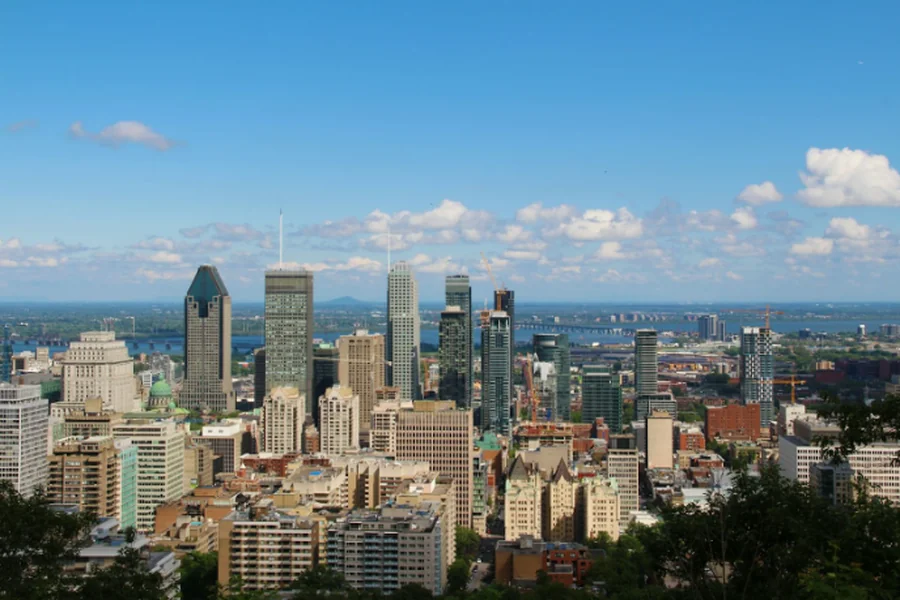
Urban development plays a central role in how people choose where to live. Beyond price and property size, factors such as zoning, density, transportation, public spaces, and neighborhood design quietly influence residential decisions. In major cities like Montreal, these elements interact in complex ways, shaping not only housing markets but also daily life, social behavior, and long-term community stability.
Understanding this relationship helps explain why housing demand varies so sharply from one neighborhood to another—and why cities with similar populations can feel fundamentally different to live in.
Urban Development as a Framework for Housing Decisions
Urban development provides the physical and regulatory framework within which housing exists. Decisions about land use, building height, density limits, and mixed-use planning determine what kinds of homes are built and who they attract.
In Montreal, urban development has historically favored medium-density residential forms—duplexes, triplexes, walk-ups, and mid-rise buildings—rather than large-scale high-rise sprawl. This approach creates neighborhoods that feel dense yet human-scaled, influencing housing choices for residents who value walkability, street life, and proximity to services.
As a result, many buyers prioritize location and neighborhood character over interior size alone.
The Role of Transportation and Accessibility
Transportation infrastructure is one of the strongest predictors of residential demand. Proximity to metro stations, bus routes, bike paths, and major arteries shapes how residents move through the city—and how they choose housing.
In Montreal, areas with strong transit connectivity often attract:
- Younger professionals seeking reduced car dependency
- Families balancing commuting time with affordability
- Long-term residents prioritizing accessibility as lifestyles change
Urban development that integrates housing with transportation networks tends to create more resilient residential markets, as accessibility remains valuable across economic cycles.
Density, Livability, and Choice
Density is often misunderstood as a negative force, but in well-planned cities it supports livability. Montreal’s approach to density—moderate height, continuous street frontage, and mixed residential-commercial use—allows neighborhoods to remain active without feeling overcrowded.
This balance influences housing choices in subtle ways. Buyers may accept smaller living spaces in exchange for vibrant surroundings, green spaces, and neighborhood amenities. The trade-off reflects a shift from purely private space toward shared urban experience.
Neighborhood Identity and Long-Term Stability
Urban development also shapes neighborhood identity, which strongly affects residential preferences. Historic preservation, architectural continuity, and zoning protections contribute to a sense of place that attracts long-term residents.
Montreal’s neighborhoods often maintain distinct identities despite city-wide growth. This stability creates predictable housing patterns, where buyers are drawn not just to individual properties but to the social and spatial fabric of an area.
Housing choices, in this context, become decisions about belonging as much as ownership.
Applied Insight From the Housing Market
While urban theory explains structural patterns, real-world housing choices reveal how development decisions translate into lived experience. Practitioners working directly in the housing market observe these effects at ground level.
Montreal real estate professionals who know the area such as alp Perez often see how zoning changes, transit expansion, and neighborhood redevelopment influence buyer behavior long before these trends appear in formal studies. This applied perspective highlights the gap between planning intent and market response—an important consideration for urban development analysis.
Mixed-Use Development and Residential Demand
One of the defining features of modern urban development is mixed-use planning. Integrating residential, commercial, and recreational spaces reduces travel needs and supports local economies.
In Montreal, mixed-use corridors attract residents who value convenience and reduced dependency on cars. Housing near these zones often appeals to buyers seeking lifestyle efficiency rather than maximum square footage.
This trend underscores how development policy can reshape housing demand by redefining what residents consider essential.
Social and Economic Implications
Urban development decisions also carry social consequences. Housing affordability, displacement, and demographic shifts are closely tied to development strategies. Areas targeted for revitalization may experience increased demand, changing the socioeconomic makeup of neighborhoods.
Montreal’s challenge—shared by many major cities—is balancing growth with inclusivity. Housing choices reflect how well development policies manage this balance over time.
Montreal as a Model of Urban Complexity
Montreal illustrates how layered urban development creates diverse housing markets within a single city. Historic districts coexist with modern developments, dense cores transition into quieter residential zones, and policy decisions ripple through housing demand in nuanced ways.
For residents, this complexity offers choice—but it also requires awareness. Housing decisions are shaped as much by urban form as by individual preference.
Final Thoughts
Urban development is not a distant planning concept—it is a daily influence on how people choose homes, neighborhoods, and lifestyles. In major cities like Montreal, development decisions quietly guide housing markets by shaping accessibility, density, identity, and long-term livability.
Recognizing this relationship allows for more informed housing choices and more responsive urban policy. Ultimately, where people live is inseparable from how cities are built—and how thoughtfully they evolve.