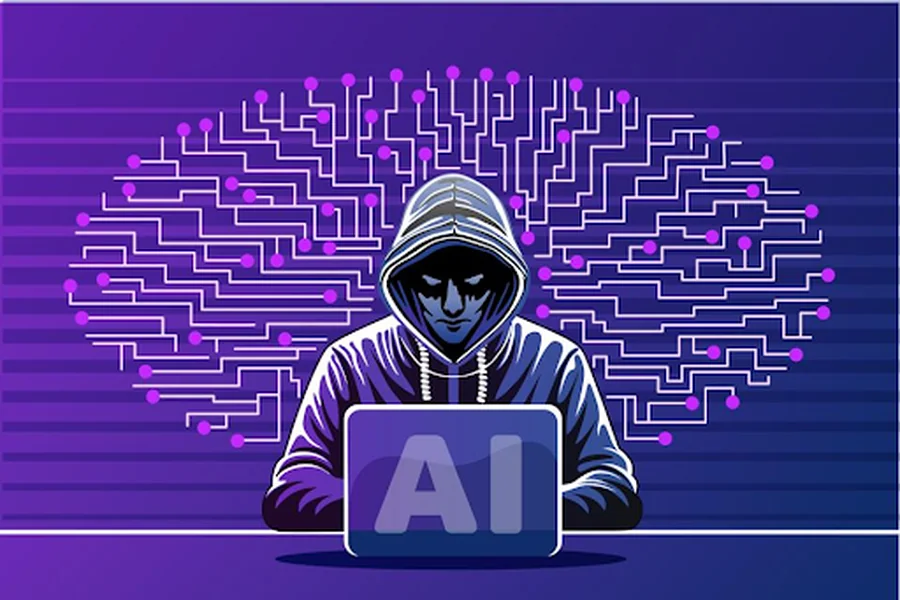
Vibe coding used to be a fun meme that people in the programming community shared with one another. Nobody expected that very soon, it would turn into an actual programming branch that doesn’t require sweating over architecture and agonizing over structured code.
Today, a lot of people offer vibe coding services, and a lot of clients hire them because such work tends to be cheaper. This trend triggers a relevant question: Is vibe coding really killing traditional programming?
AI and Vibe Coding: Trouble in Disguise of a Miracle
AI has benefited many fields; there is no doubt about it. It went so far as to facilitate the hiring processes in tech industry, which used to be time-consuming and inconsistent. Now, companies can perform faster screening of their potential candidates by letting AI match the most relevant profiles with job descriptions.
However, human input remains invaluable, as it’s people who make final decisions. This is the problem that programmers have begun to face. It’s one thing to use AI as a tool, but vibe coding goes further than this. It’s an AI-centered development workflow that requires very little technical expertise.
Initially, people embraced vibe coding, as it came with the following benefits:
- Faster prototyping. Developers gained an opportunity to move to the stage of building a functional MVP in mere hours instead of days, which pleased their clients to no end.
- Reduced technical work. AI took care of major technical work aspects, such as setup logic, configuration, code writing, etc.
- Lower barrier to entry. Even total beginners could experiment without having to master every syntax rule in advance; this allowed people to rely on their creativity rather than knowledge.
Startups were thrilled because they got a chance to develop their software at record speed. People interested in programming found Vibe coding empowering because it allowed them to try their hand at it with minimal knowledge.
Indeed, vibe coding helped a lot of beginner programmers understand their craft better. However, that’s where the disguise of a blessing began to come off, revealing several unfortunate truths.
The Dangers of Vibe Coding for Programmers and Their Clients
There are three biggest dangers that vibe coding poses for traditional programmers and clients. Let’s review them in detail.
Skill Degradation
The more people began to rely on AI in their programming, the more their skill level started to drop. Worse, while beginners simply fail to learn much, those on the way to becoming experts lose sight of what they are supposed to do. AI influence has damaged the following set of programmers’ skills:
- Problem-solving. Instead of working their way through complex problems logically, deepening and refining their skills, a lot of developers begin to trust AI blindly.
- Debugging skills. When developers stop tracing errors step by step and then just give AI requests to debug something, they stop understanding the root cause of a problem.
- Long-term thinking. Vibe coders lack the key knowledge to understand how all system components work, so they can’t see a product strategically, with all its possibilities and drawbacks.
In this regard, vibe coding definitely puts traditional programming in danger, as fewer people think they need skills; they believe that relying purely on AI will suffice.
The Death of Trust
As the latest research shows, the majority of Americans are wary of AI since 31% feel worried about its pervasive influence, 28% don’t believe it’s good, 26% avoid it entirely, and 18% feel guilty about using it. This trend is getting worse when clients hire vibe coders and end up with a messy product that doesn’t work properly.
We’re facing a vicious cycle: more developers flood the IT market, boasting of their AI skills. Traditional programmers become disillusioned or also try to vibe code for lower rates. The results are unsatisfying on every single level, and this leads to a massive loss of trust: clients don’t believe they’ll get a good product and refuse to pay typical rates. Developers don’t believe they will get paid properly, so they switch to other industries.
Technical Debt Accumulation
Another serious danger that vibe coding poses is technical debt accumulation. A vibe-coded app might look functional in the short term, but if you take a deeper look, it’ll fall apart. This is what it can lead to:
- Inconsistent architecture where different parts of the system operate under disjoint rules because they were created during unconnected AI sessions.
- Duplicated logic, as AI often resorts to applying the same low-level tactics without caring about the required system complexity.
- Limited documentation, as a vibe coder is unable to explain how they made specific design decisions.
These issues are inevitable in vibe coding. The biggest problem is that they aren’t visible right away: a client encounters them over time, which erodes trust toward developers further.
Is Vibe Coding a Threat to Traditional Programming?
Make no mistake, vibe coding isn’t killing the existing traditional programming skills, but it endangers their future. More and more people begin to think that if they can vibe code some quick apps, they are masters of their craft. They charge less than experts, so a lot of clients end up hiring them. As a result, they get broken apps with no potential for development.
So, on the one hand, it’s getting harder to find reliable tech experts. People think vibe coding is a solution that can help them avoid lengthy training, and they show a horrifying lack of expertise. On the other hand, clients don’t feel satisfied with such services, which gradually leads to a disaster.
Is there a way out of it? Yes, but it’s not going to be simple. A few years have to pass until vibe coding stops being a trend everyone thinks they can jump onto. Programmers interested in actually mastering their craft must keep studying, and experts should continue to provide human-centered assistance.
The task of the clients is to entrust their projects to actual professionals. The more people choose human skills enhanced by AI over AI enhanced by occasional human input, the more the programming industry will thrive, a perspective often discussed in innovation and industry-focused insights from nextinnovationsusa.