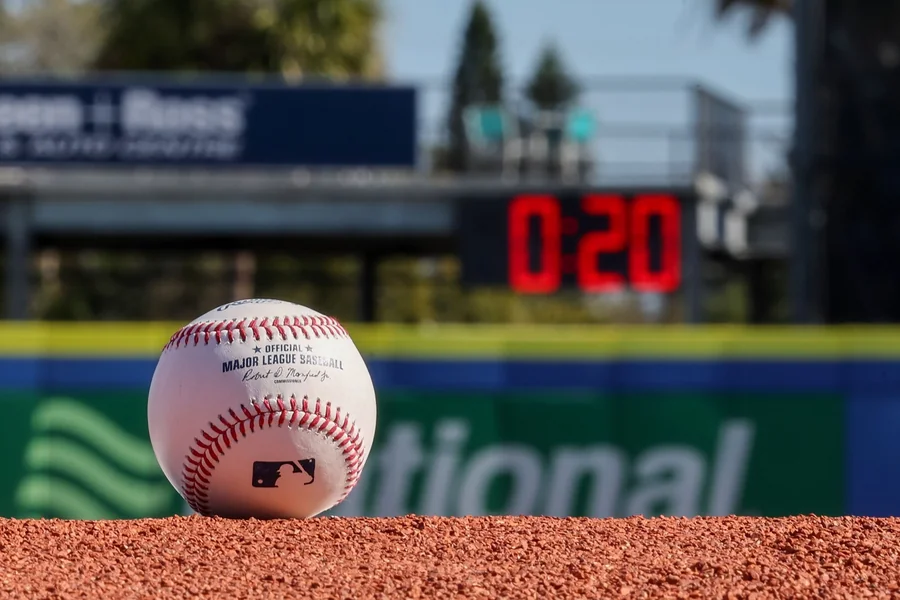
In a TikTok world, a three-hour game feels like an eternity. Streaming platforms are deploying new weapons to battle the biggest enemy of modern sports: boredom.
Baseball has a “pacing problem.” It is a 19th-century pastime trying to survive in a 21st-century attention economy. While the pitch clock has helped speed up the action on the field, the broadcast itself faces a tougher challenge: keeping a Gen Z audience engaged during the downtime.
The modern viewer is constantly one thumb-swipe away from leaving. To combat this churn, broadcasters are turning the stream into an interactive playground. They are gamifying the lulls, offering alternative camera angles, and integrating social feeds directly into the display. This article explores how streaming technology is artificially accelerating the “slow game” to match the frantic heartbeat of the digital age.
The “Dead Time” Dilemma
The average MLB game has about 18 minutes of actual action (ball in play) spread over nearly three hours. The rest is standing around, adjusting gloves, and throwing rosin bags.
For a linear TV broadcast, this dead time is filled with commercials or slow-motion replays. But on a digital stream, this is the “churn zone.” Viewers drift away to Instagram or YouTube.
Broadcasters are countering this with “Picture-in-Picture” advertising and “side-by-side” content. Instead of cutting away from the field, they keep the camera on the dugout drama or show highlights from other games happening simultaneously. The goal is to ensure there is never a static screen.
The Gamification of the Pitch
The most effective tool for engagement is prediction. Streaming apps now feature “Pick ‘Em” games overlaid on the video. Will the next batter hit a fly ball or a grounder? Will the pitch be over 95 mph?
This micro-betting (often for points, not money) forces the viewer to pay attention to every pitch. It transforms the downtime into decision time. It turns a passive wait into an active strategy session.
This interactive layer requires a robust platform. You cannot predict the next pitch if your stream is 30 seconds delayed. The demand for real-time interactivity drives users to high-performance hubs. Portals like https://yjtv114.com have become essential for this breed of interactive fan. By providing low-latency feeds that sync perfectly with live betting and prediction apps, these platforms ensure that the “game within the game” functions correctly. They prevent the frustration of making a prediction on a play that has already happened.
The “Big Inning” Alert System
Not everyone wants to watch the full nine innings. Many fans prefer to “parachute” in when things get exciting.
Modern streaming apps send push notifications not just for scores, but for situations: “Bases loaded, no outs, tie game in the 8th.” These “Big Inning” alerts act as a summoning call. They bring casual fans flooding back into the stream for the climax.
This behavior creates massive, sudden spikes in traffic. The infrastructure must be elastic enough to handle a 500% surge in viewers in under a minute.
Cross-Pollination of Fandom
Interestingly, the solution to the slow game often involves looking outside of baseball. Baseball broadcasts are learning from the pacing of soccer (football) and basketball.
Soccer, with its continuous clock, holds attention differently. Fans accustomed to the relentless flow of European leagues bring those expectations to other sports. When they search for content, they often cast a wide net. A user searching for 해외축구중계 (overseas soccer broadcasting) is likely a fan who values continuous action. Broadcasters are trying to capture this demographic by applying “soccer-style” graphics—constant clocks, minimal interruptions—to baseball. They are trying to make the diamond feel as urgent as the pitch.
The ” Condensed Game” Feature
For many, the solution is simply to not watch live. The “Condensed Game” format—a 15-minute supercut of every pitch that resulted in an out or a hit—is becoming the preferred way to consume baseball.
This allows a fan to watch four games in an hour. It strips away the ritual and leaves only the data. While purists hate it, it is a necessary adaptation for a time-poor generation.
Conclusion: Saving the Pastime
Baseball will never be a fast sport. Its beauty lies in the tension, the pause, and the duel. But the broadcast of baseball must be fast. By using technology to fill the gaps, add interactivity, and curate the best moments, streaming platforms are ensuring that America’s pastime remains relevant in the age of instant gratification. The game stays the same, but the way we watch it is accelerating.