
Golf is a very complex sport that requires a high level of discipline. If you like golf, you’ve probably heard “golf handicaps.” It may look like they are used only by professionals, or they’re hard to understand. That’s not true. Golf handicaps are necessary measurements that help you understand the game better. Today, we’ll discuss golf handicaps and teach you how to calculate them!
If you not only like watching golf but also betting on it, click here: https://ind.1xbet.com/line/golf ! There, you can place the stakes at the highest odds available!
What Is a Golf Handicap?
A golf handicap calculates the golfer’s scoring ability. Handicaps level the playing field and help golfers play fair games. Golf handicaps help athletes with different levels play together. In different countries, it measures the different organizations. The United States Golf Association calculated the handicaps of all their players in the USA.
Handicap measures the strokes a golfer must take above or below par. The higher it is, the more strokes a player should subtract from their score. This is made to define the actual score. If the handicap is low, the player will have a lower net score.
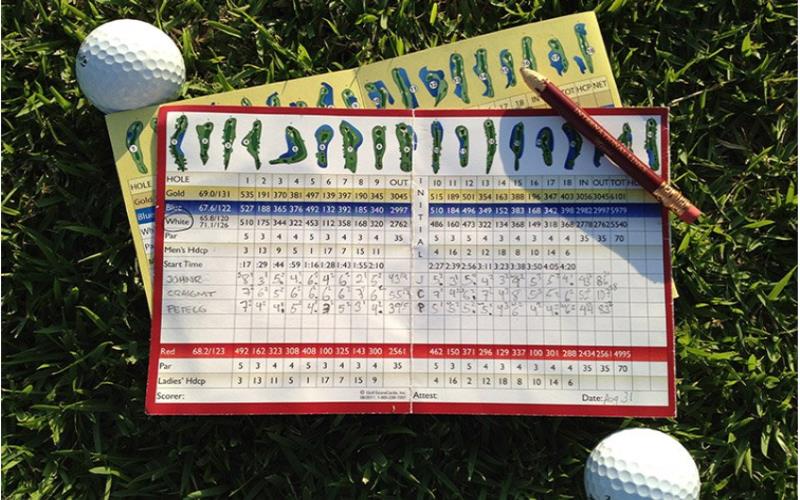
How Golf Handicaps Are Calculated?
All golf associations in different countries have their own rules about calculating handicaps. Yet, the main idea is simple for everyone. Now, we’ll provide the simplest version of calculations made in the USGA Handicap System to make it more understandable. But remember, the real calculations can be a bit complex.
Calculating Differential for Each Round: In this step, you need to subtract the course ratings from your own score and then multiply by 113. After that, divide this number by the slope rating of the course.
Formula: (Score – Course Ratings) x 113 / Slope Rating = Handicap
- Select the Lowest Differential: If you have 20 scores, take the 10 lowest differentials. On the other side, if you obtain at least 5, the number of your differentials will be decreased.
- Calculate the Average of Your Lowest Differential: Take all your lowest differentials and divide them by your differentials.
Formula: Sum of Low Differentials / Handicap Differentials - Multiply the Average by 0,96: This step is called “bonus for excellence” and rewards the most exceptional play. The result will be your Handicap Index.
Formula: Average of the Lowest Differentials x 96% = Index
Although we listed all formulas used for Handical calculating, the real cases can be challenging. Sometimes, the formula can be changed according to the country or golfing body. Consult the local golf club or association to determine your handicap.
Why Does It Matter?
Some people can ask, “Why do I need to know my handicap if I want to play a round of golf? Of course not. Knowing it is not a requirement. If you’re a regular player, it’s more likely you won’t have a handicap at all. But why are people still calculating it, then?
Properly calculated handicaps will help you play with golfers of different levels. At the end of the game, you’ll be able to level out your scoring. Moreover, determining it will help you mark your progress over time. As you become a good golfer, you can enjoy your handicap going down.
Common Misconceptions
Although golf handicaps are made for the reliability of golf players, some golfers distribute false information about them. But how do we know the truth if you’re a beginner player? In this part of the review, we’ll list the common misconceptions.
-
- Handicap shows the performance against the par. Not true. It is just a score differential reflecting the player’s ability and playing conditions. It will show your best score differentials, not the best performance against the par.
- A player must put on every hole. Another misconception is that you should put on every hole. Yeah, if you want to gain a medal, you must put on every hole, but it’s not necessary.
- If you don’t finish the par, it’s net par. That’s not the case. If you enter your score and write “no score,” the system will give you 2 options. You can say that you played the hole but didn’t complete it or that you didn’t play the hole at all.
-
- A handicap can climb without a check. It’s also a false statement. The player’s handicap can’t increase by more than 5 positions in a 12-month period.
- The weather doesn’t matter. WHS still has regulations for golfers during harsh weather.
Tips for Improving Your Golf Handicap
If you have a high handicap, you might think about the ways that you can use to improve it. A high one is not necessarily a bad thing; you can still improve this index and play with more skilled golfers. But if you want to know the reliable tips that will help you lower your definition, read here:
- Buy the Forgiving Golf Clubs: With forgiving golf clubs, you can transform your game. Thanks to the lightweight shafts, you’ll feel confident during the game and hit more precisely.
- Train With a Coach: Golf lessons from great coaches can improve your swing. The trainer will show you the best tricks that will help you play better.
- Play More Golf: The simplest advice. By playing more, you’ll obtain the right technique and learn how to hit the most difficult holes.
How to Obtain and Maintain a Handicap?
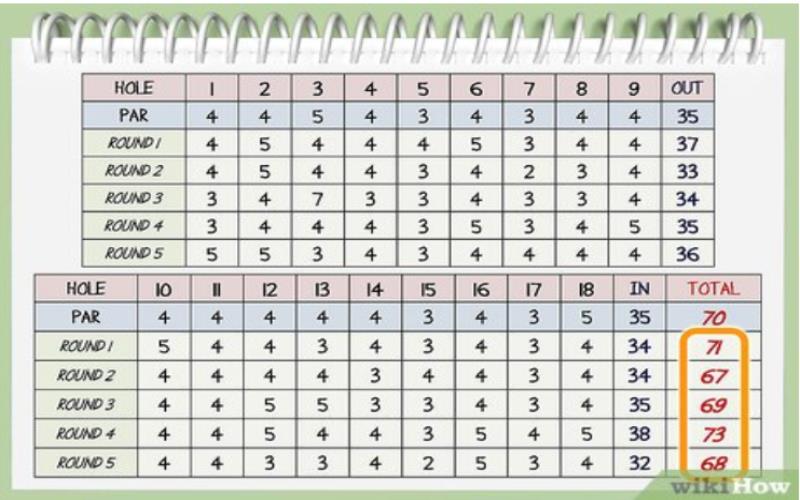
To establish your handicap, you need to record 5 rounds of 18-hole. Then, talk with your coach at the golf club or join the golf association in your state to have access to certain services. There are many services available that calculate the player’s handicap, such as GHIN, Golfret, and others.
To maintain the index, you have to enter your score after each round. The system will ask you to fill in course ratings and slope numbers. After that, your handicap will be calculated, and you’ll see the number. Just don’t forget to provide the system with your score, and soon, you’ll see the difference in your performance!
Conclusion
Knowing your handicap is a power! Don’t worry if you’re a beginner and have bad results; enter your scores, and you’ll see the results soon. With plenty of training and a big desire to play well, your handicap will be lower with every game!